Work under a house is priced on a diagnosis, not a tape measure. Published estimates put a typical foundation repair at about $2,200 to $8,200 (This Old House, October 2026; Fixr, January 2026), but the same guides price a single pier at $1,000 to $3,000, so a pier job can run several times the headline figure. Most jobs here fall into three groups: water coming in, damage the water has already done, and a structure that has moved. The order you deal with them in affects your total more than any single price does.
This page sets out that order and points to the guide for each job. CostPlain has no crew and gets no quotes: we build estimates from public wages and dated prices, as set out in how we estimate costs.
Costs at a glance
Published estimates come from commercial cost guides, most of which sell contractor leads. Our worked examples are built from retail prices and BLS wages, with hours and a 20% overhead and profit line as our assumptions. Neither is a quote.
| Job | Published estimate | Our worked example |
|---|---|---|
| Exterior French drain | $10 to $100 a foot (Fixr, January 2025) | About $2,460 for 100 ft across a yard |
| Sump pump swap in an existing pit | $309 to $755, average $531 (Angi, October 2026) | About $350; about $1,310 for a new pit and pump |
| Foundation waterproofing | Most jobs $2,461 to $8,207, average $5,247 (Angi, October 2026) | About $6,000 for an interior drain and sump in a 30 × 40 ft basement |
| Crawl space encapsulation | $5,000 to $15,000, average $5,500 (Angi, October 2026) | About $6,565 for 1,500 sq ft with a 20 mil liner and dehumidifier |
| Crawl space repair | Most $4,500 to $8,000, average $6,000 (HomeAdvisor, June 2026) | About $1,560 to sister six joists; about $1,850 for four posts on new footings |
| Engineer’s foundation inspection | About $300 to $1,000; Angi’s average $600 (October 2026) | About $360 for a walk-through and letter; about $570 with a floor survey |
| Foundation repair | About $2,200 to $8,200; piers $1,000 to $3,000 each (This Old House, Fixr) | About $351 to inject one 8 ft crack |
Step 1: Deal with water from outside
Many problems below the floor start with water, and the cheapest fixes are outside. A federal building-science guide for existing crawl spaces starts with bulk water drainage: grading soil away from the house, fixing gutters and downspouts, and footing drains, before vents are sealed or a ground cover goes down. Checkbook, a nonprofit consumer group, notes that extending a downspout often costs under $15.
If water still collects after a few storms, a trench drain is the next step up. Our French drain cost calculator builds the price from stone, pipe, fabric and crew hours. Labor is the largest line, so length, depth and ground matter more than the pipe. A shallow yard drain and a footing drain dug down beside a foundation wall are both called “exterior French drains”, and Fixr prices them at $10 to $50 a foot and $80 to $100 a foot.
Where water has to be pumped out, check which job you are buying. Swapping a pump in an existing pit takes a plumber an hour or two; cutting a new pit into a concrete floor means breaking concrete, digging, setting a basin and running a discharge line. Our sump pump replacement cost guide prices both, plus a battery backup at about $640, and explains why HomeAdvisor’s “replacement” average is more than double Angi’s.
Step 2: A wet basement or a damp crawl space
“Waterproofing” covers a gallon of masonry paint and a full exterior dig with drains and membrane, which is why most jobs cost a few thousand dollars and a full system can pass $15,000. Interior drains manage water once it is in; exterior work stops it at the wall but needs digging. Our example of one 40 ft wall dug out and sealed from outside comes to about $4,400 to $9,000, depending mostly on the excavation. The foundation waterproofing cost guide separates the methods and shows both build-ups.
A crawl space has its own version of the problem. Encapsulation seals the ground and walls with a liner and usually adds a dehumidifier, which at about $1,770 for the unit alone is more than a quarter of our full estimate. It also costs about $277 a year in electricity in our example. A plain ground cover with no dehumidifier comes to about $2,470. The crawl space encapsulation calculator works it out for your own crawl space. A liner keeps ground moisture out, but it doesn’t stop water flowing in and it doesn’t repair damaged wood, so standing water and rot come first.
Step 3: Get a diagnosis from someone not selling the repair
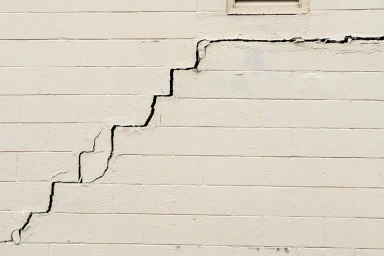
A crack, a sloping floor or a sticking door doesn’t show its own cause. The Texas Section of the American Society of Civil Engineers says in its residential foundation guidelines that “the majority of cracks do not compromise structural integrity”. With a repair firm’s free inspection, the person deciding whether you need piers also sells them.
A home inspector looks at the foundation as one item among many; a licensed structural engineer gives an opinion on whether the house has moved, why, and what to do. Our foundation inspection cost guide explains the three levels of engineer’s investigation, from a walk-through and letter to a floor survey and testing. A few hundred dollars for an independent engineer is small next to the $10,000 to $40,000 that HomeGuide puts on raising a settling foundation.
Step 4: Price the structural repair
On a pier job, the big price lever is the number of piers, then their depth and how hard they are to reach. On our build-up, crew labor with overhead and profit explains only about $235 of a $1,500 pier. The rest pays for steel, equipment, the engineer, the permit, the warranty, sales and margin, so quotes far apart per pier are more likely to differ on those than on wages. The foundation repair quote checker turns a quote into a price per pier and lines up two quotes on the same basis. A cheaper total can hide a higher price per pier and fewer piers, and how many your house needs is a question for the engineer’s plan.
Crawl space houses fail elsewhere: rotted sill plates and joists, sinking piers, sagging beams. Sistering a joist is priced at $100 to $300 or more, against $1,000 to $2,000 to replace one fully (HomeAdvisor, June 2026). Mold is not the same as rot: the US Forest Service’s Wood Handbook says mold affects the strength of wood “only slightly”, so a quote that replaces moldy but sound joists should say why. Our crawl space repair cost guide covers joists, posts, beams and sill plates, with two worked build-ups.
This site gives prices, not repair steps. Leave jacking, shoring and underpinning to a licensed contractor working to an engineer’s plan, with whatever permit your local building department requires.
What moves the price
- Scope. “Repair”, “waterproofing” and “encapsulation” each cover jobs from a few hundred dollars to many thousands, and dehumidifiers, backup pumps, permits, engineers’ letters and site restoration are sometimes included and sometimes not.
- Access. A low crawl space or a finished basement slows the crew, and a pier under a patio adds breaking and replacing concrete. The same joist costs much more to reach in a 16-inch crawl space than in a 4-foot one.
- Digging. Exterior waterproofing, footing drains and piers all depend on excavation, and soil, rock, roots and buried lines change the hours. Call 811 before any digging; the federal pipeline safety agency says the call is required by law and free.
- Warranty and margin. Long or transferable warranties are a cost the company carries for years. Our worked examples often sit at the low end of published ranges, partly because they use median wages and price in no warranty.
Reading a quote
Each guide gives a checklist for its job. The same warning signs recur:
- A single lump sum with no line items, pier count, linear feet or liner spec.
- A system sold before anyone has found where the water comes from, or a structural package with no plan for the water.
- Piers or jacks sold with waterproofing or encapsulation, without an independent assessment.
- A price that holds only for today, or a “lifetime” warranty without written terms.
Get at least two written quotes for the same scope, then compare them line by line. A quote well above our estimate isn’t necessarily wrong, but it should show which lines are higher and why.
General information, not professional, legal or financial advice. Figures are published estimates and worked examples as given in each guide, not quotes. A licensed local contractor, an engineer and your building department decide what your house needs. CostPlain has no crew, does no repairs, sells no leads and takes no referral fees.