Heating, cooling and electrical bills come in two sizes. A repair is usually one part and a service call: Angi puts most furnace repairs at $133 to $505 (updated 25 September 2026) and an AC capacitor replacement at $200 to $400. A replacement runs to thousands: This Old House puts a standard air conditioner and gas furnace at $5,000 to $12,500 installed (updated 12 June 2026, from Angi’s estimates). In between sit repair-or-replace jobs such as a failed compressor, which Angi puts at $800 to $2,300. Each guide below sets published estimates side by side with a worked build-up from dated prices and federal wage data, and explains why they differ.
This is general information, not professional, legal or financial advice. Cost figures are published estimates and worked examples, not quotes, and local prices vary. CostPlain has no crew, does no jobs and takes no referral fees.
Start with what is happening
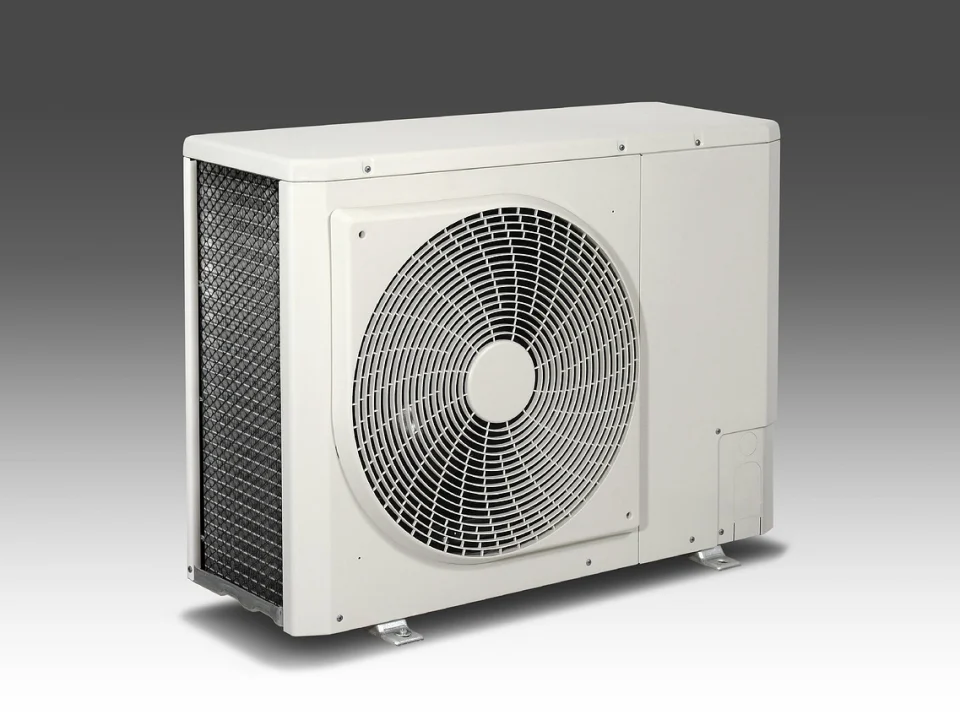
- The outdoor unit hums but won’t start, or its fan has stopped. A failed run capacitor, a part listed at $8.54 to $33.50, is one common cause. Our AC capacitor replacement cost guide explains why the bill is so much bigger.
- A technician says the compressor has failed. It is the costliest part in the outdoor unit. Our AC compressor repair-or-replace guide includes a cost-per-year check.
- The furnace won’t light, or starts and shuts off. Our furnace repair cost guide prices five common jobs, from a flame sensor to a draft inducer.
- The system is old, or keeps needing repairs. The HVAC replacement cost calculator prices an air conditioner, furnace or heat pump line by line.
- The house has no ducts, or one room is never comfortable. See our mini split installation cost guide for one room or several.
- You are adding a big electric load, the panel is full, or it is an old fuse box. Our electrical panel replacement cost guide separates a panel swap from a 200-amp service upgrade.
The costs at a glance
No government agency publishes installed prices for these jobs. The middle column is one of several published estimates in each guide; the right column is our build-up for one defined job, and neither is a quote.
| Job | Published estimate | Our worked build-up |
|---|---|---|
| AC capacitor | Angi: average $250, normal range $200 to $400 (Oct 2026) | About $95 for a standalone call; about $45 added to a visit already booked |
| Furnace repair | Angi: $133 to $505, average $318 (Sep 2026) | About $150 for an igniter; about $645 for a draft inducer |
| AC compressor | Angi: $800 to $2,300, average $1,200 (Oct 2026) | About $1,940 for a 3-ton system; about $700 if the maker’s warranty covers the compressor |
| Electrical panel | Angi: $518 to $2,194 (Oct 2026); Fixr: $1,800 to $4,500 for a 200-amp upgrade (Jan 2025) | About $2,150 for a 200-amp panel swap; about $3,560 for a 100-to-200-amp upgrade, before utility charges |
| Mini split | HomeGuide: single zone $2,500 to $6,000; multi-zone $6,500 to $15,000 or more (Oct 2025) | About $3,480 for one head; about $9,470 for three heads on one outdoor unit |
| AC and gas furnace | This Old House: $5,000 to $12,500, standard efficiency (Jun 2026) | About $7,750 for a 3-ton AC and 80% furnace, permit included |
Why a small repair costs more than its part
Our build-ups price labor at what an employer pays, not what a company bills. The BLS median wage for HVAC mechanics and installers was $29.33 an hour in May 2025, and we add 44% for benefits and payroll taxes from BLS employer cost data, which gives $42.24. Overhead and profit is an assumed 20%. How we estimate costs explains the method.
On small jobs that method comes in low. If Angi’s $250 capacitor average covered a $16 part and an hour and a half of work, the labor would be billed at about $156 an hour, about 3.7 times the employer cost. The gap is the service call: driving, dispatch, callbacks and quiet days, which no public source breaks down. Angi puts emergency furnace labor at $150 to $215 an hour, against $50 to $150 on a normal call.
The cheapest small repair is one added to a visit you were already paying for. ENERGY STAR recommends annual pre-season check-ups, and a weak capacitor found at a spring tune-up costs the lower figure in our table, not an emergency rate in July.
Check the diagnosis before a big repair
Copeland, a large compressor maker, says in its service instructions that as many as one-third of compressors returned to it for warranty analysis are found to have nothing wrong. A failed capacitor or contactor can look like a dead compressor, so ask for the readings that showed it failed, written on the invoice.
If you are told a furnace needs replacing, especially for a cracked heat exchanger, get a second opinion from a company that isn’t quoting for the new furnace.
Repair or replace
ENERGY STAR suggests considering a replacement when a heat pump or air conditioner is more than 10 years old or a furnace more than 15, along with frequent repairs and rising energy bills.
Cost guides’ rules of thumb often disagree. In our furnace example, a 17-year-old furnace needs a $645 draft inducer against a $6,000 replacement quote. The “$5,000 rule” (age times repair price) gives $10,965 and says replace. The “50% rule” puts the repair at 11% of a new furnace and says repair. Per winter, the two paths came out roughly the same once fuel savings were counted, so the answer turned on things arithmetic can’t see.
A cost-per-year check is more useful than either rule. In our compressor example, a $6,000 new system spread over 12 years costs $500 a year, so a $1,940 compressor repair has to keep the old system running at least 3.9 more years to match it. A parts warranty usually doesn’t cover labor, which is why a warranty compressor job still came to about $700.
What moves a replacement price
- Equipment. It was about 52% of our AC-and-furnace estimate and the least certain line, because we priced a budget brand sold online. In our mini split build-ups, equipment and parts were 65% to 71%, so brand and model matter more than the hourly rate.
- Ducts. ENERGY STAR says a typical house loses about 20 to 30 percent of the air moving through its ducts to leaks and poor connections. Sealing or replacing ducts is often the biggest extra in a quote.
- Sizing. A Department of Energy guide says Manual J and S calculations should be completed before choosing replacement equipment. Replacing “the same tonnage as before” skips that step.
- Heat pump or AC and furnace. Compare a heat pump with an AC and furnace together, since it does both jobs. Our ducted heat pump example came to about $9,370, including $1,384 for a new 240-volt circuit.
When the panel comes into it
A heat pump, a mini split, an EV charger or an electric tankless water heater may need a new circuit, and sometimes more panel capacity. That doesn’t always mean a bigger service. In California’s TECH Clean program, slides from a 2023 ENERGY STAR partner meeting showed 480 panel replacements across 10,446 heat pump upgrades, about 4.6%. Before agreeing to an upgrade, ask the electrician for the load calculation that shows the house needs it.
The utility’s side is the part most quotes leave out. In an August 2026 Lawrence Berkeley National Laboratory survey, utility costs passed on to homeowners for a single-family service upgrade had a median of $3,500, and nearly all utility respondents who answered said their utility pays nothing toward one. A charge that size would roughly double our $3,560 upgrade, to about $7,060.
Rules behind every quote here
- No federal tax credit in 2026. The IRS says the energy efficient home improvement credit will not be allowed for property placed in service after December 31, 2025. State and utility rebates may still apply.
- Refrigerants. EPA says an existing system may be serviced and repaired throughout its useful life, so an R-410A system can still get a new compressor.
- Who does the work. EPA requires nearly all HVAC technicians to be certified in refrigerant handling, and most states license electricians, according to the BLS. These guides give no do-it-yourself steps for gas, refrigerant or electrical work; a licensed local contractor and your building department decide what a job needs.
Gas smell and carbon monoxide
If you smell gas, leave the house now. Don’t switch lights on or off, use a phone or start a car near the smell. Call 911 from a neighbor’s house or somewhere well away from the leak (PHMSA).
Carbon monoxide has no smell. CPSC advises carbon monoxide alarms “on every level of the home and outside sleeping areas”, and if you suspect poisoning, to get outside to fresh air immediately and then call 911. A carbon monoxide alarm does not detect a gas leak.
Each figure is cited to its source in the guide it comes from. Sources checked on 3 November 2026.